Beyond the Bull Run: Why Product Utility Matters
·
2 min. read
A rally can draw attention to new projects and ambitious promises. When enthusiasm fades, a more useful question remains: what does the product help people do?
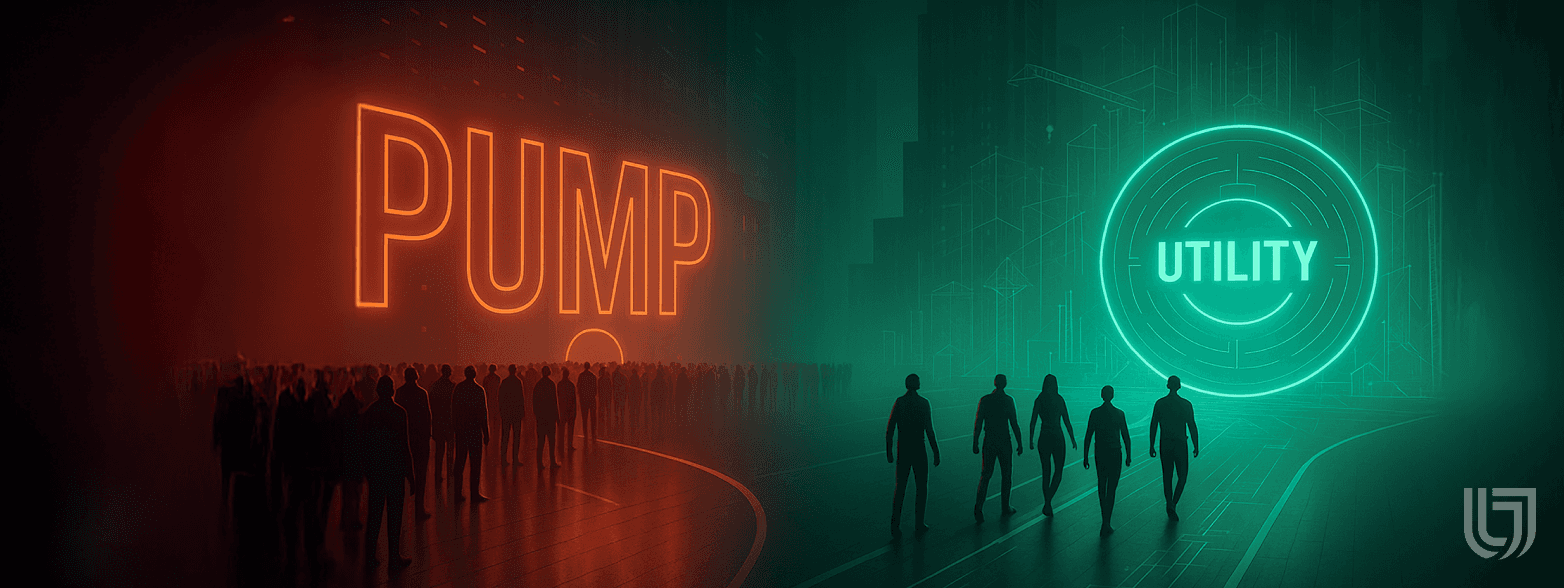
Speculation drives attention, but utility drives adoption. Web3 doesn’t move forward because of price action — it evolves when people start using crypto to simplify real things: payments, staking, rewards, compliance, access, and digital identity.
Utility is what users actually stay for
Usability and delivery can support a product beyond a market cycle. They do not ensure commercial success or a rising token price; demand, execution and economics still matter.
If you look back at the projects that survived past cycles, they all had something in common — a purpose beyond speculation:
Ethereum introduced smart contracts that now power entire economies.
Solana made fast, low-cost transfers practical for real-world applications.
DeFi protocols turned saving, lending, and staking into user-friendly products.
That’s what defines staying power in Web3 — not excitement, but execution.
How to tell if a project is built to last
Utility isn’t abstract. You can recognize it by looking at three simple signals:
Daily relevance — can you imagine using it more than once a week?
Problem-solving — does it fix something annoying in traditional finance or in crypto itself?
Integration — does it connect with other ecosystems or remain isolated in its bubble?
If a token or platform fails all three, it’s probably designed for hype, not for humans.
Where Unitywallet fits in
This is exactly why Unitywallet focuses on use first, hype later.
Our features — like Gasless Send, KYT on demand, and Sub-accounts — are built to solve real pain points that everyone in Web3 faces: confusing fees, safety risks, and messy portfolio management.
Tools like our AI Assistant already help users understand crypto concepts and wallet features. Guidance is different from autonomous trading: users still need to verify the information and authorize their own actions.
Utility doesn’t just make a wallet better. It makes Web3 sustainable.
What you can do as a user
If you’re navigating the crypto space, start filtering projects by what they do, not what they promise. Ask yourself:
Does it make my experience simpler or safer?
Would I still use it if the token price dropped 50%?
Does it reward activity or speculation?
These questions are the new DYOR.
They separate builders from marketers — and meaningful innovation from noise.
Final thought
Speculation fuels the start of every cycle, but utility decides who remains when it ends.
The next Web3 era belongs to products and people who build beyond the bull run.
Useful products give people a reason to return beyond the chart. That is a goal to evaluate, rather than a rule that every market rewards.


