Recovery Phrases, Private Keys and Self-Custody Explained
·
1 min. read
Cryptocurrency. Non-custodial wallet
A wallet’s recovery phrase, private keys and app password do different jobs. Understanding those differences helps explain what self-custody means and what you need to protect.
Seed Phrase. Private Keys
Unitywallet is self-custodial: you control the wallet’s signing keys. An exchange account usually works differently—the provider controls the custody keys and manages account access. That creates a dependency on the provider’s security and ability to honour withdrawals.
Self-custody removes that custody dependency, but also makes backup and access management your responsibility. Losing the only usable keys or recovery information can mean losing access permanently.
Keep a recovery backup offline in a secure place. Never share it with support staff or enter it into a website to verify a wallet. Protect the device and examine transaction and approval requests: a well-hidden phrase does not prevent you from signing a harmful instruction.
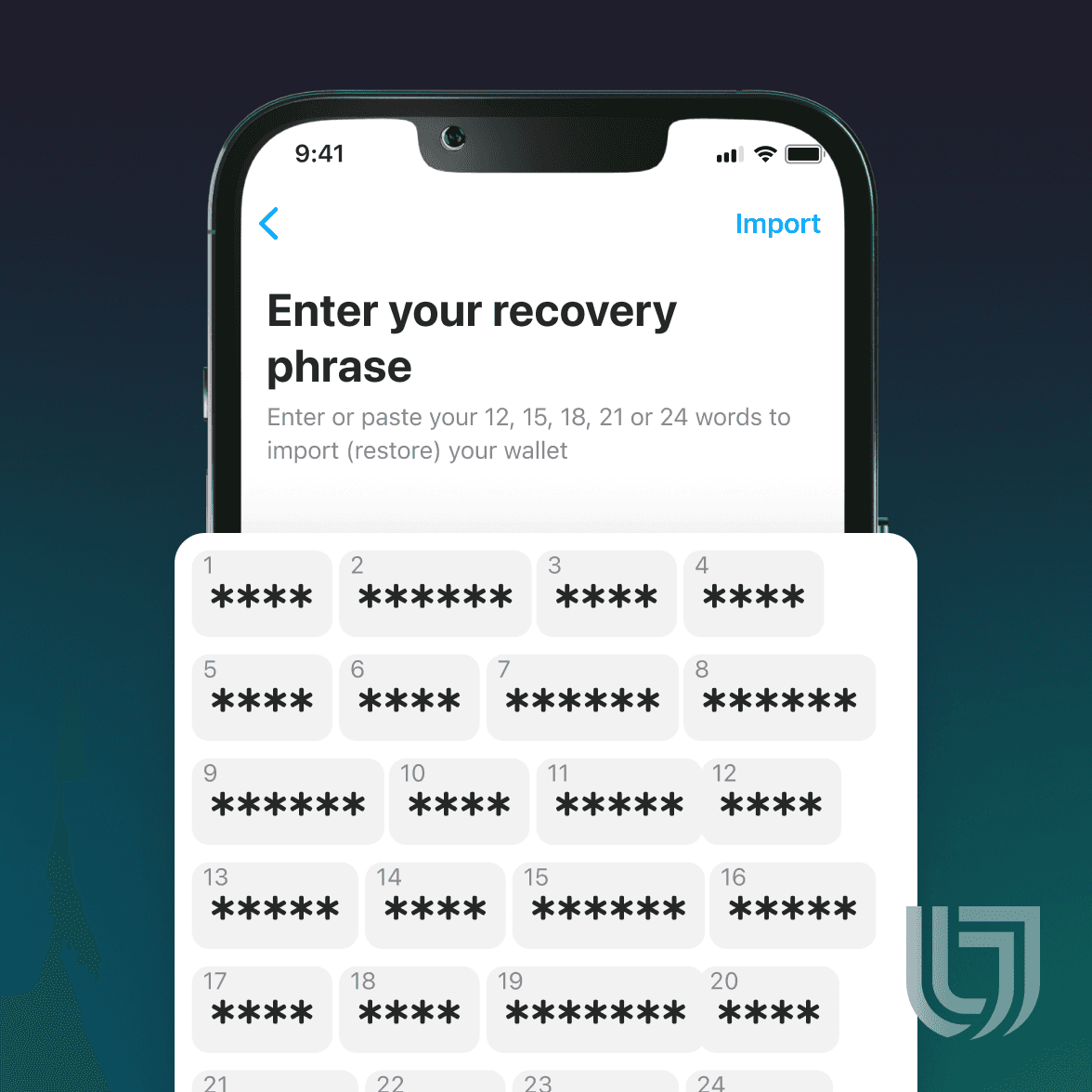
A recovery phrase is a human-readable backup used by many wallets. BIP-39 permits several lengths, commonly 12, 18 or 24 words. Use the exact phrase generated for your wallet; never add words to an existing phrase to try to make it longer.
The phrase, together with any optional BIP-39 passphrase, derives a seed from which wallet keys can be generated. A private key signs transactions; an app password normally protects local access or encrypted storage. These are different things, and changing an app password does not change compromised blockchain keys.
Sources: BIP-39 specification; Wallet security guidance


