The great money mystery: fiat vs. cryptocurrency
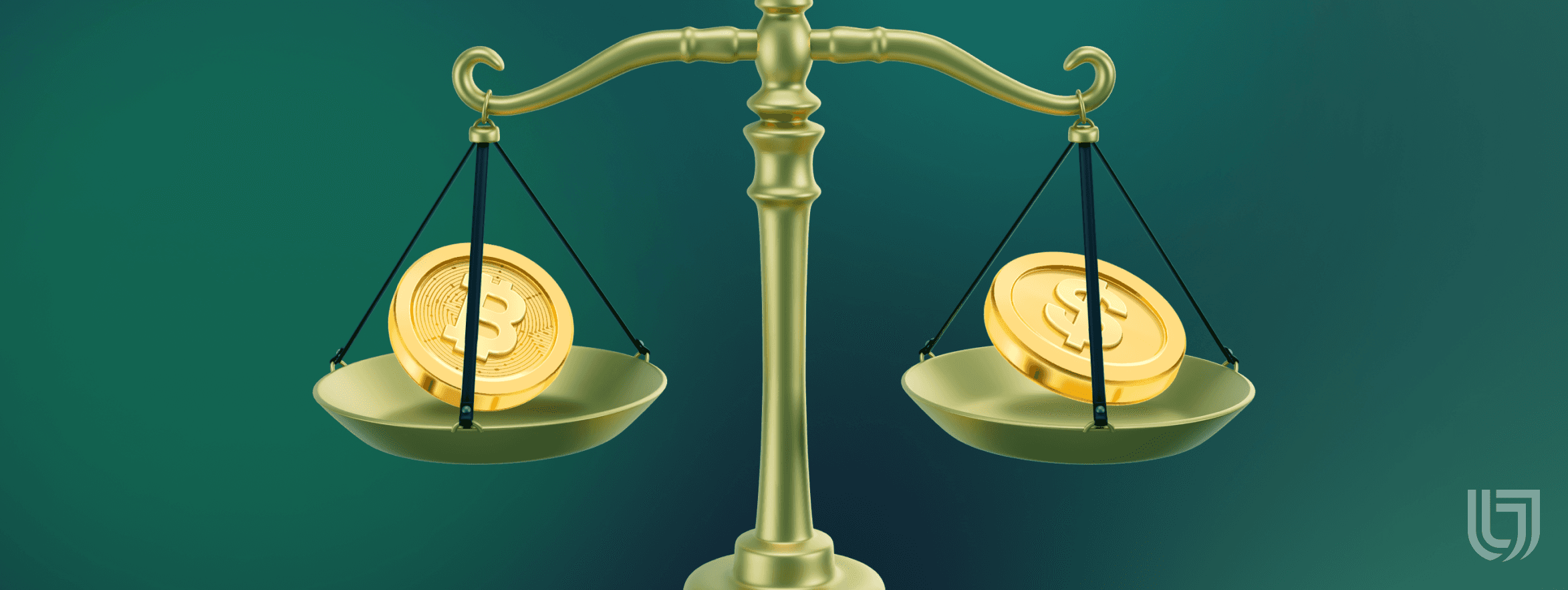

·
3 min. read
Fiat money and cryptocurrency can both be digital. The more useful comparison concerns who issues them, how transactions settle, what gives them value and which rules govern their supply.
First things first: what is fiat? No, we’re not talking about the Italian carmaker. Here it means money whose value is not based on redeemability for a fixed amount of a commodity such as gold. Its usefulness depends on institutions, acceptance and confidence—not simply on the material it is made from.
Fiat currency is what most of us use every day, like dollars, euros, yen, and pounds – the cold, hard cash that pays for your morning latte or your late-night pizza craving. It’s easy to carry around, and people generally accept it as payment. Plus, it has that delightful, crisp, paper smell. (Don’t act like you don’t sniff it too.)
Now, let’s talk about cryptocurrency—the new kid on the block(chain). Cryptoassets use cryptography and distributed-ledger systems to record ownership and transfers. Bitcoin launched in 2009 under the name Satoshi Nakamoto. Later assets use different designs; they are not all equally decentralized or secure.
Cryptocurrencies like Bitcoin, Ethereum, and the ever-so-meme-worthy Dogecoin differ from fiat in several key ways. Here’s the lowdown on some of the differences between the two:
Form of Money: Fiat includes banknotes and coins, but also electronic bank deposits. Cryptoassets are digital, so this comparison is not simply paper versus pixels.
Control: Fiat systems involve central banks, commercial banks and legal institutions. Cryptoassets distribute control differently: some networks are decentralized, while some tokens depend heavily on an issuer or administrator.
Supply: Bitcoin has a capped issuance schedule, but other cryptoassets may have ongoing issuance or changeable rules. A limited supply does not guarantee purchasing power or protect a market price from falling.
Privacy: Cash, bank payments and public blockchains expose different information. Public crypto addresses are often pseudonymous, but transaction history can reveal links to people and organizations.
Trust: Blockchains can reduce reliance on a central record-keeper. You still depend on code, devices, signing decisions and, sometimes, issuers or service providers. “Trustless” does not mean risk-free.
That is the lowdown on fiat and cryptocurrency. Here’s a quick summary, followed by our grand conclusion!
In Summary
Fiat exists as both physical cash and electronic balances.
Cryptoassets are digital and use different security and governance models.
Neither fiat nor crypto offers a universal guarantee against loss of purchasing power.
Pseudonymous blockchain transactions can still be traced and linked.
The useful comparison is who issues the asset, controls the rules and bears the risk.
In Conclusion
In the battle of the currencies, it’s clear that both fiat and cryptocurrency have their own distinct features and advantages. Fiat is the classic, well-established currency we’ve all grown up with, while cryptocurrency is the innovative, rebellious newcomer shaking up the financial world. Ultimately, it’s up to you to decide which one (or both) tickles your financial fancy. And who knows? Maybe one day we’ll be paying for our morning lattes with a sprinkle of Bitcoin dust. Until then, stay savvy, and may your pockets be forever filled with your currency of choice!


