On-Chain Identity: Why Everyone Will Have a Web3 Passport Eventually

·
3 min. read
TLDR
In Web2, users constantly create accounts and share personal data.
Wallet connections already removed passwords and accounts.
The same flow naturally extends to identity and security checks.
This is how wallets evolve into Web3 passports.
What users are used to in Web2
For most users, this is still the default experience.
Open a service
Create an account
Set a password
Confirm email
Upload documents
Wait
This repeats everywhere.
Different services.
Same steps.
Same risks.
Why this approach breaks for users
Each new service creates a separate version of you.
You end up with:
multiple accounts
duplicated personal data
no visibility into where your data lives
One breach is enough to cause damage across everything.
The problem is not users.
The problem is the model.
The first improvement users already experienced
Then wallets entered the flow.
Instead of creating accounts, users started doing this:
Open a service
Connect wallet
Approve connection
Use the service
No password.
No email.
No new profile.
This already removed a lot of friction.
What wallet connections actually solved
When a wallet is connected, the service learns only a few things.
User controls this wallet.
This wallet is unique.
This session is approved.
What the service does not receive:
Password
Email
Personal documents
This alone solved:
fake accounts
password reuse
endless registrations
Without users thinking about identity at all.
Where today’s wallet connections stop
Today, wallet connections mostly answer one question.
This works perfectly for actions.
But real services often need more context.
What services still need to understand
In practice, many services need answers like:
Is the user allowed to access this?
Does this user meet basic requirements?
Is this interaction safe?
Today, this usually breaks the flow.
Wallet connected
Please fill the form
Please upload documents
Please wait
Which feels like going back to Web2.
The natural extension of the same flow
Instead of adding new steps, the existing flow can be extended.
No documents sent.
No profiles created.
Same interaction model.
More useful decisions.
This is the key shift.
The Web3 passport model in simple terms
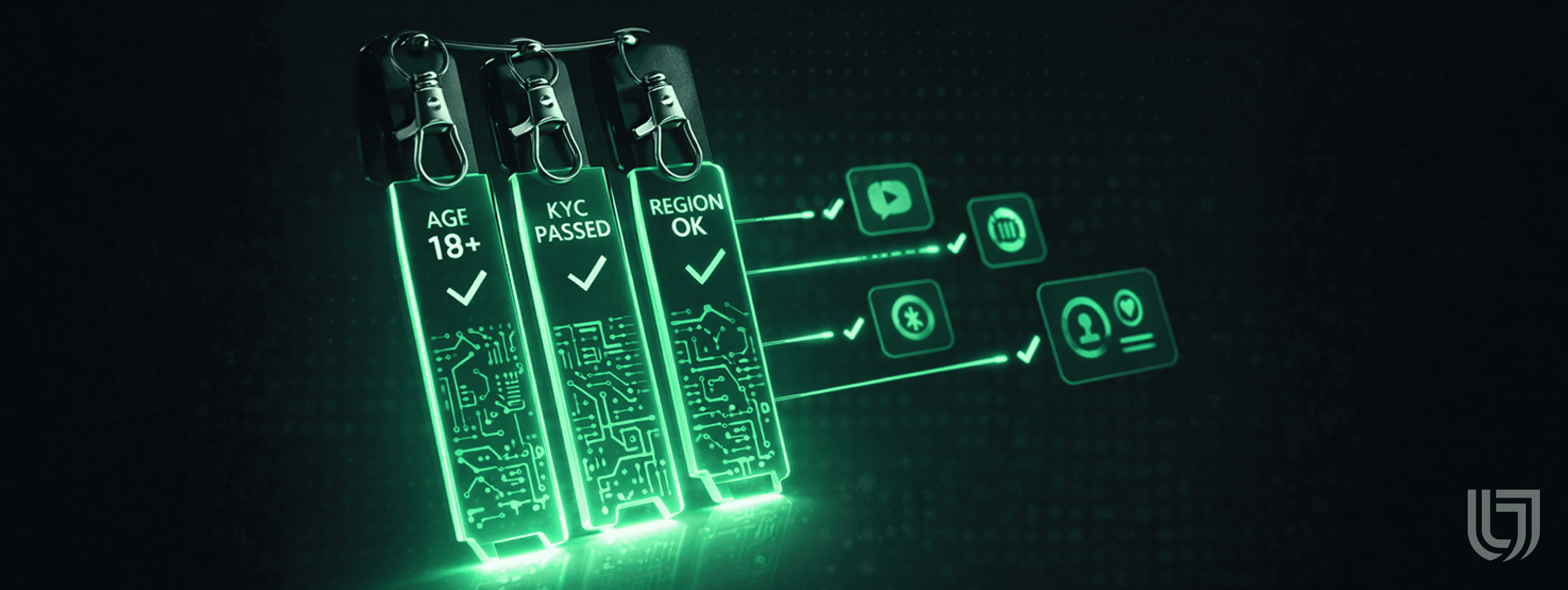
A Web3 passport is not a document.
It is the wallet acting as a decision layer.
Not everything about you.
Only what is required.
Each service asks one question.
The wallet answers only that.
Nothing else is exposed.
How WalletConnect fits into this picture
WalletConnect already provides the communication layer.
Service ↔ WalletConnect ↔ Wallet
Today, it carries requests to perform actions.
The same channel can carry requests about eligibility and access.
For the user, the flow stays familiar.
Connect.
Review.
Approve.
Only the meaning of the request evolves.
Where Unity Wallet fits
Unity Wallet does not need to promise finished identity checks today.
Its role is different.
Unity Wallet is positioned as a ready identity gateway.
a wallet users already control
a place where future identity and security logic can live
a neutral interface between users and services
As the ecosystem moves from actions to permissions,
wallets like Unity Wallet become the natural place for this logic.
Not by forcing new flows.
By extending existing ones.
Why this is useful for users
For users, this evolution means:
Less repetition
Less data exposure
Less friction
And more:
Control
Clarity
Predictability
Identity stops being something you upload.
It becomes something your wallet handles for you.
Final takeaway
Web2 identity relies on accounts and data collection.
Wallet connections already simplified access.
Extending the same flow to permissions and eligibility is the next step.
This is how wallets gradually become Web3 passports.
