What Actually Happens When You Send Bitcoin
·
2 min. read
TLDR
A Bitcoin transaction usually takes 10–60 minutes to reach high-confidence finality.
This delay is intentional. It’s how Bitcoin stays secure and decentralized.
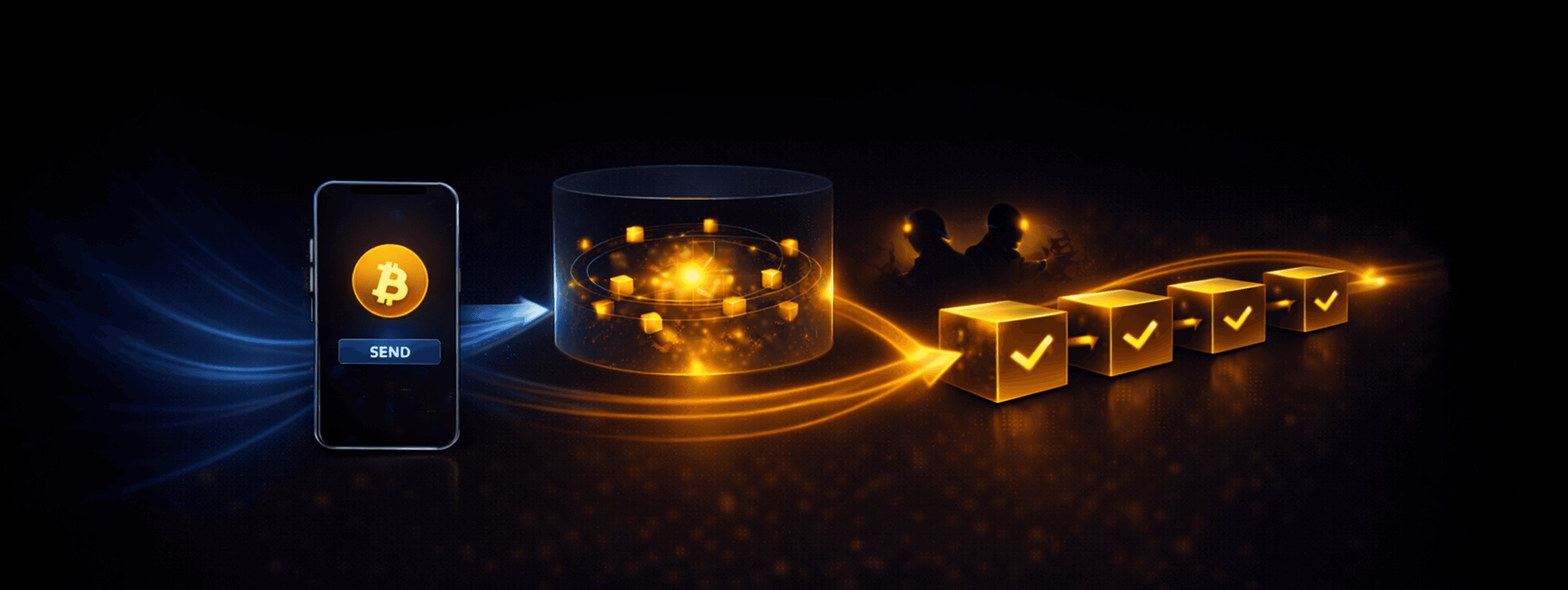
Step 1. You press “Send”
Pressing Send does not move Bitcoin instantly.
Your mobile wallet creates a signed transaction request containing:
sender and recipient addresses
amount
transaction fee
At this point:
the transaction has 0 confirmations
it is included in 0 blocks
Nothing has been processed yet.
The wallet is only preparing and signing the request locally on your device.
Step 2. The transaction enters the mempool
After broadcasting, the transaction enters the mempool, a global queue of unconfirmed transactions shared across the Bitcoin network.
Some context:
during normal activity, the mempool holds tens of thousands of transactions
during congestion, it can exceed 300,000 pending transactions
blocks are limited to roughly 1–4 MB, so not all transactions fit at once
You can observe this in real time here:
https://mempool.space
Step 3. Miners process transactions
Miners continuously scan the mempool and select transactions for the next block.
Key facts:
Bitcoin targets one block every ~10 minutes
the network processes about 5–7 transactions per second
transactions are prioritized by fee rate, not by when you pressed Send
More on how Bitcoin mining works:
https://bitcoin.org/en/how-it-works
Step 4. The transaction is added to a block
Once included in a block, your transaction receives its first confirmation.
Typical benchmarks:
1 confirmation: transaction is included on-chain
3 confirmations: extremely hard to reverse
6 confirmations: widely considered final
You can verify confirmations here:
https://blockstream.info
Where mobile wallets fit into this
Mobile wallets do not change how Bitcoin works.
They simply make this process accessible and understandable.
A good mobile wallet should:
sign transactions securely on-device
broadcast them reliably to the network
clearly show confirmation progress
help users understand what “pending” actually means
This is where wallets like UnityWallet focus their effort — not on speeding up the blockchain, but on making the experience transparent and predictable for users.
The network does the verification.
The wallet does the communication.
The simple takeaway
When you send Bitcoin from a mobile wallet, you are not skipping steps.
You are:
creating a signed request on your device
entering a global mempool
being processed by miners
becoming part of an immutable blockchain
Understanding this flow makes Bitcoin feel less mysterious and a lot more trustworthy.
