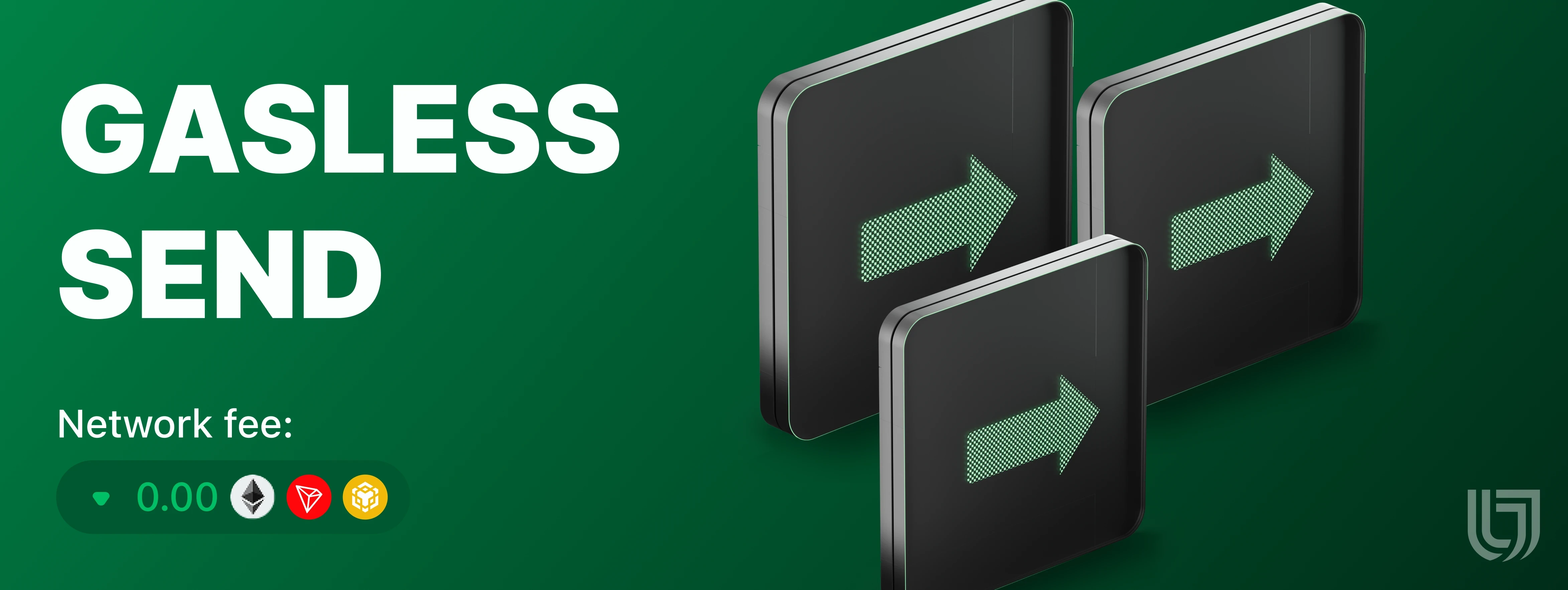
Sending a stablecoin can require a second asset to cover the network fee. Gasless Send offers a different fee flow for eligible transfers, reducing the need to manage a separate gas balance for that action.
Ordinary transfers on Ethereum typically use ETH for gas, while TRON uses its Bandwidth and Energy resource model with possible TRX costs. The stablecoin balance and the resources needed to send it are separate.
That distinction can make a simple payment confusing, especially when a wallet shows enough tokens but not enough resources for the selected transfer.
A Different Way to Pay the Transfer Fee
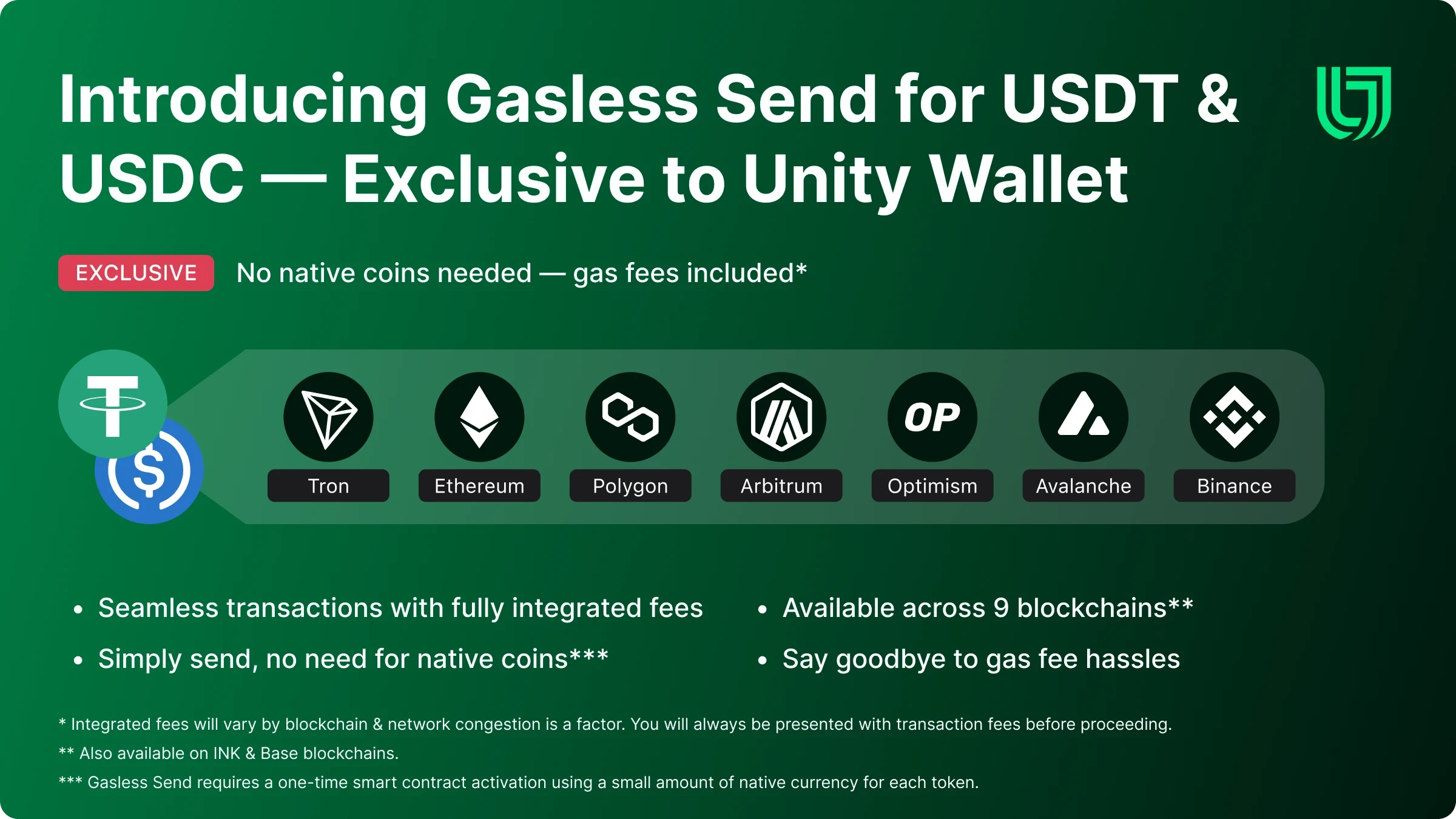
Version 8.3.0 introduced Gasless Send for eligible USDT and USDC transfers. It includes the applicable fee in the transfer amount, with a possible initial approval step as explained below.
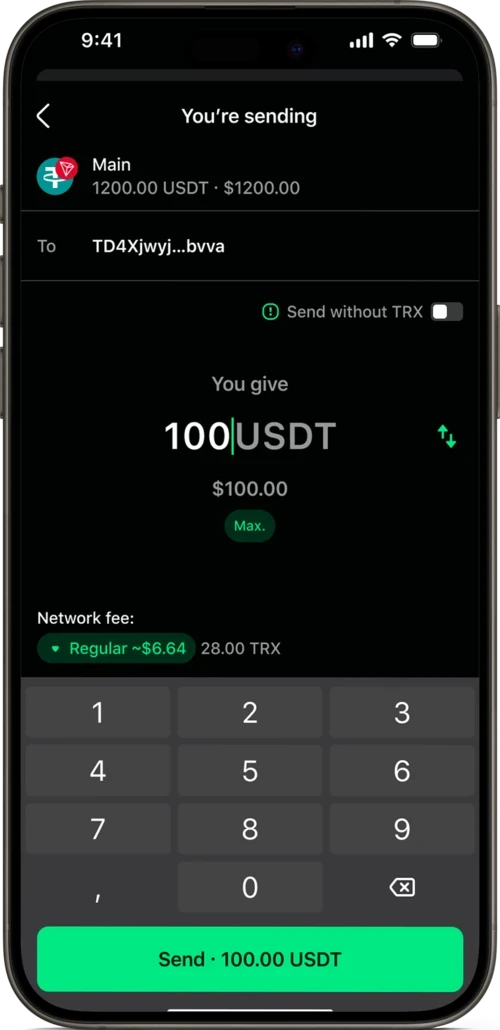
Without Gasless Send
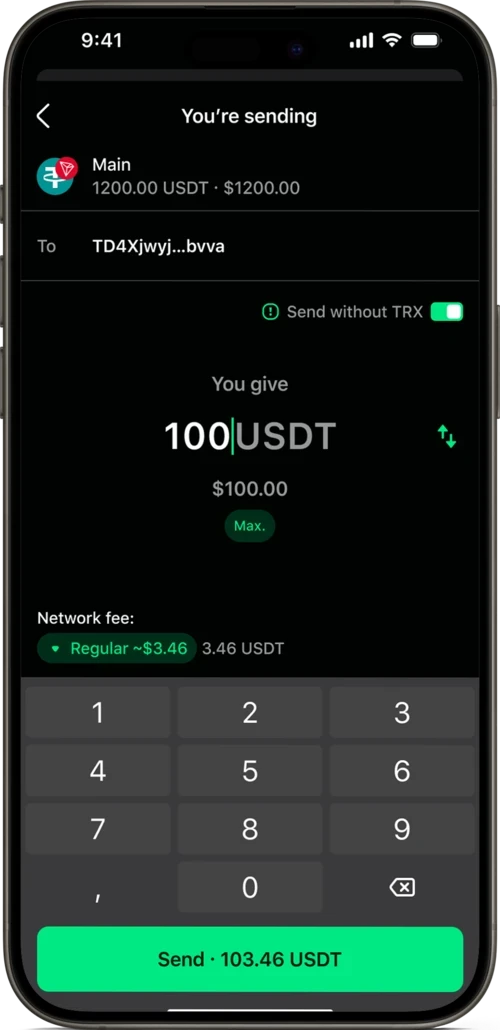
With Gasless Send
The launch covered Tron, Ethereum, Polygon, Arbitrum One, OP Mainnet, Avalanche C-Chain, BNB Smart Chain, Ink and Base. These are networks, not a list of gas tokens: Arbitrum One, OP Mainnet, Ink and Base use ETH; BNB Smart Chain uses BNB. Check the app for the token/network combinations currently available.
When Gasless Send is available, review the fee and any approval requirement before confirming. The feature simplifies eligible transfers, but does not remove network costs.
What Is Gasless Send?
Gasless Send includes the applicable fee in the transfer amount for supported USDT and USDC transactions. The illustrations below document the original release:

Ink and Base were also included in the launch.
Check current availability in the app; network names in this article do not imply that separate INK or BASE tokens are required for gas.
Why This Matters?
Fewer preparation steps: Where supported, a token-denominated fee can reduce the need to acquire a separate native asset first.
Review the quote: The fee and delivery conditions still depend on the asset, network, recipient and current service terms.
How It Works?
When sending USDT or USDC in the app, you’ll now see a new toggle switch: “Send without ETH” (or TRX, POL, etc., depending on the chain).
Enable the option when available, then review the amount and fee. Some tokens require an initial approval, which may be a separate paid transaction.
The integration coordinates the eligible transfer and fee flow. It does not remove network processing, contract risk or recipient requirements.
Some tokens may require “Approve Allowance”:
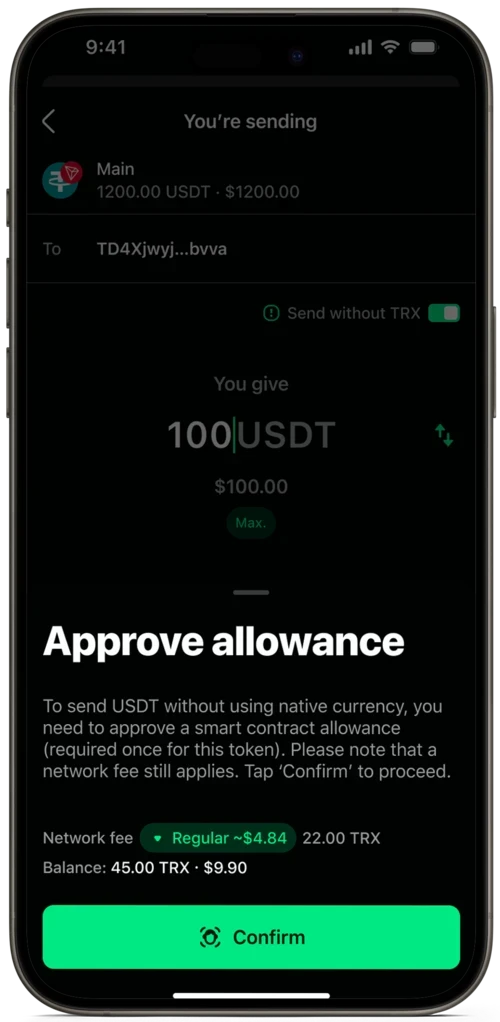
An allowance authorizes a particular spender to use a token. Whether a new approval is needed depends on the token, network, spender and existing allowance.
Review the approval’s asset, spender and amount, plus its current fee. An earlier fixed TRX or dollar example is not a current quote.
After approval, gasless sends can cost less than regular transactions and streamline the process into a single-step transfer.
Designed to Simplify Stablecoin Transfers
Gasless Send brings this workflow into Unitywallet. Review the current quote and recipient details for each transfer.
The Bottom Line
Gasless Send reduces the need to manage a separate gas balance for eligible transfers. Confirmation timing still depends on the network. Before sending to an exchange or service, confirm that it accepts smart-contract transfers.
Choose between the available fee methods using the current quote. Before sending to an exchange or service, confirm that it accepts the transfer method and network.
Fees vary in real time. Gasless Send is not guaranteed to be cheaper or faster than a regular transfer.
The illustrations describe the original release. Check current availability, fees and recipient compatibility in the app.
Sources: Current Gasless Send guide; Arbitrum gas currency; Ink network information